
February Already? Only right we show you love...
January was a month about depth, not breadth. |
Less “shipping for the sake of shipping.” |
Below is a snapshot of what we shipped, why it matters, and a couple of operator voices that helped sharpen our thinking along the way.… |
Property Data Is Only Useful If It Has Memory |
One of the clearest themes we’ve been hearing—especially from investors and developers building underwriting or acquisition workflows—is that snapshots lie. |
Properties don’t exist at a single moment in time. They accumulate intent. |
So in January, we leaned harder into property history and transaction context, including: |

|
This isn’t about adding more fields. |
Is this a real comp? |
If you’re building anything related to residential development, underwriting, or capital allocation, Brandon Riddick-Seals articulates this better than we ever could. |
He’s the former head of the Atlanta Housing Authority. And on the latest episode of Ground Truth, Brandon breaks down why surface-level data fails, how incentives shape the built environment, and why historical context matters more than most software admits. |
👉 Listen to Brandon Riddick-Seals on Ground Truth |

Skip Trace Data Is Only Useful If You Knows Who's Who |
Historically, skip trace data has been returned as a loose collection of phones, emails, and addresses — leaving teams to figure out who belongs to which record. |
Over the past month, we’ve been reworking Skip Trace to be person-first. |
In v2 Skip Trace, results are returned as a clean |
(If you’ve noticed |

Side note: If you’re building CRMs, loan origination tools, or anything workflow-heavy, Aaron Chapman’s episode on the pod is worth your time. |
Aaron has a sharp take on where automation helps, where it quietly hurts, and why human judgment still matters—especially as AI gets layered into tools that were already fragile. |
👉 Listen to Aaron Chapman on Ground Truth |

Quick Note On The New DIY Customer Experience (CX) |
As you may have seen in our last edition, we launched CX just before Christmas. You can now sign up for a free trial or start a paid subscription (month to month or annual), all without a sales call. You can also see granular usage metrics and manage API keys. |

The new console isn’t a “launch-and-forget” moment for us. It’s an experiment we’re watching closely. |
Completion vs abandonment rates. |
The good news: nearly 500 people have already tried the new flow, which feels awesome. The learning: We’ve got work to do to make sure you can get all your questions answered without breaking stride while building. We’ve got some whizz bang ideas on the board for how to make the experience truly seamless. |
We’ll keep iterating in public, and we’ll keep being honest about what’s working and what isn’t. |
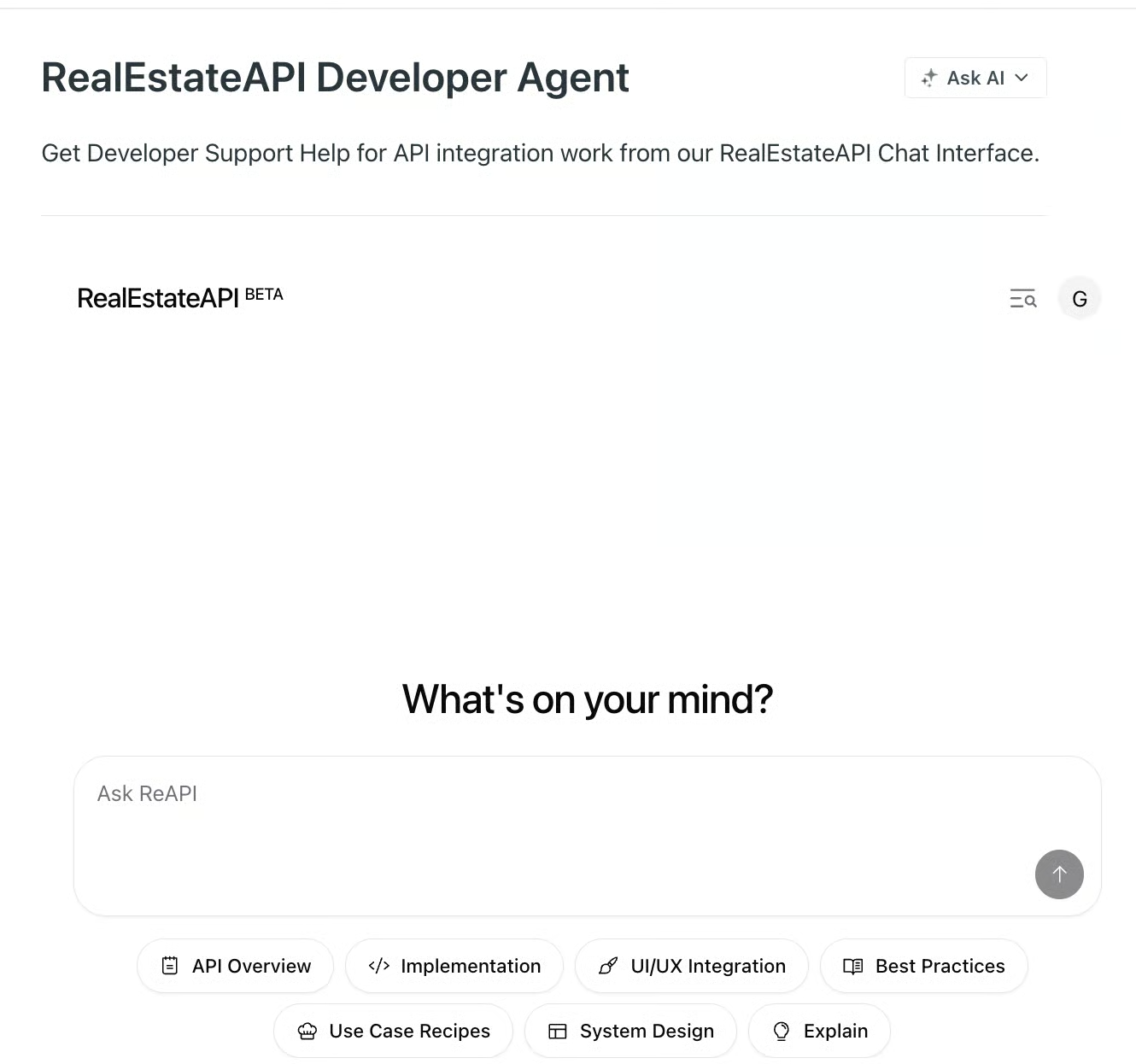
Speaking of making things seamless: we also embedded a Context7-trained documentation assistant directly in our docs. Ask questions in natural language, get code examples, troubleshoot errors. Access it here.
Why We’re Doing It This Way |
The best product teams don’t guess what users want. |
Ground Truth isn't content marketing for us—it's field research. The features above are what we heard. |
And if the pattern holds, February's conversations will shape what we ship in March. |
If you're building something interesting with this stuff—or struggling with something that should be easier—let us know. We're listening. |
💜 |


